

Last Updated on February 18, 2026
Imagine coming home to find your curious cat has knocked over a vase, chewed on electrical cords, or gotten into something they shouldn’t have. As a cat owner, you want to ensure your furry friend is safe and sound in every corner of your home.
But with their natural curiosity and agility, this can feel like a daunting task. That’s where our room-by-room safety checklist comes in. This guide is crafted just for you, to help you transform your home into a feline-friendly haven. You’ll discover practical tips that are easy to implement, ensuring your cat can explore safely without you having to worry about hidden hazards.
Dive in, and let’s make every room in your home a safe playground for your beloved pet. Your peace of mind and your cat’s safety are just a few steps away.
Credit: www.zoetispetcare.com
Contents
Living Room Hazards
Creating a safe living room for your cat requires attention to detail. Cats are naturally curious and often explore by jumping, climbing, and even chewing on things. A room that seems harmless to us might be full of risks for them. Here’s how to make your living room a safe haven for your feline friend.
Secure Cords And Wires
Cats love to play with dangling objects, and cords or wires can be particularly tempting. This can lead to chewing, which is dangerous for both your cat and your electronics. Secure cords by bundling them together and using cord covers or sleeves.
Consider rearranging furniture to hide cords behind heavy items. You could also tape them down to prevent any loose ends. Remember, a little effort can prevent potential accidents.
Safe Furniture Choices
Not all furniture is cat-friendly. Avoid pieces with sharp edges or unstable structures that might tip over. Opt for heavier, sturdier furniture that can withstand a curious cat’s antics.
Think about fabrics too. Leather or tightly woven materials can be more resistant to claws. What furniture changes can you make to ensure both style and safety?
Toxic Plants And Decorations
Many common houseplants are toxic to cats. Plants like lilies and philodendrons should be kept out of reach or replaced with cat-safe options like spider plants or cat grass. It’s not just plants you need to worry about; some decorations can pose risks as well.
Be wary of items that might shatter easily if knocked over. Consider replacing fragile decorations with more durable options. How can you make your living space both beautiful and safe?
By addressing these living room hazards, you can create a safe environment for your cat. Have you checked your living room for these risks lately?
Kitchen Safety Tips
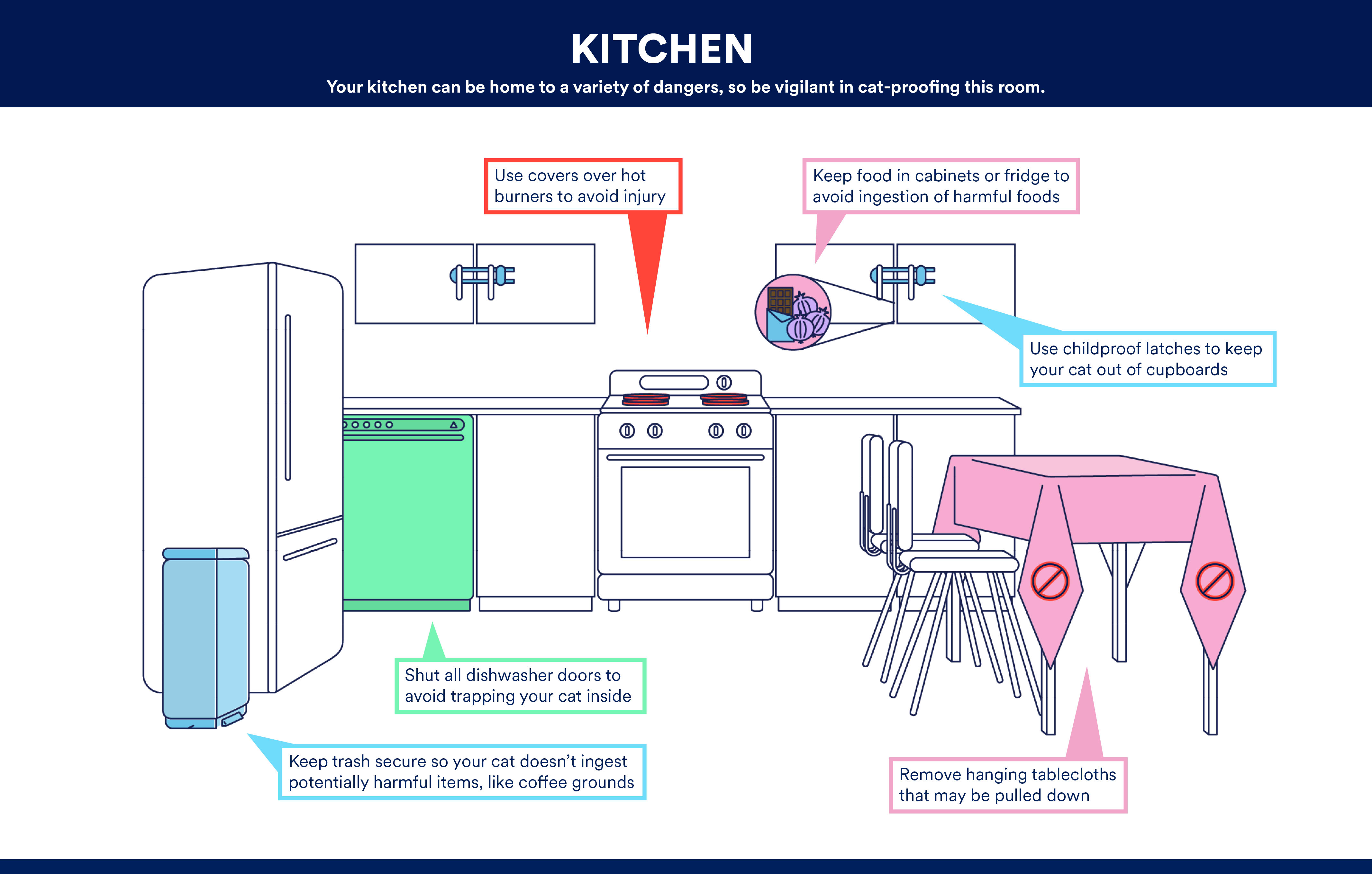
The kitchen can be a danger zone for curious cats. They love to explore, but some items can be harmful. Making your kitchen safe for your furry friends is crucial. This checklist will help you keep your cat safe in the kitchen.
Food And Trash Security
Keep food out of reach. Cats can jump onto counters easily. Store food in cabinets or sealed containers. Avoid leaving leftovers on the table. Use a trash can with a secure lid. Cats might dig through trash for scraps. Ensure trash is inaccessible.
Appliance Precautions
Secure appliances to prevent accidents. Cats may knock over small appliances. Keep cords hidden or wrapped. Curious cats might chew on them. Unplug appliances when not in use. This reduces the risk of electric shock.
Dangerous Chemicals And Cleaning Supplies
Store chemicals safely. Cleaning products can be toxic to cats. Keep them in locked cabinets. Check labels for hazardous ingredients. Cats might ingest them accidentally. Make sure bottles are tightly closed.
Bedroom And Bathroom Precautions
Creating a safe environment for your feline friend is crucial. Cats are curious creatures and may explore areas in your home that can pose dangers. The bedroom and bathroom are two spaces where extra precautions are necessary. By cat proofing these rooms, you can prevent accidents and ensure your cat’s safety. Let’s delve into how you can make these areas safer for your furry companion.
Preventing Climbing Accidents
Cats love to climb. Keep furniture away from windows to prevent falls. Secure shelves and cabinets to walls. Use child-proof locks to restrict access. Cats may climb curtains, so choose heavy-duty fabrics. This minimizes risks of tearing or falling. Consider installing cat-friendly climbing structures. These provide safe outlets for your cat’s climbing instincts.
Hidden Dangers In Closets
Closets can be a treasure trove for cats. Keep chemicals and cleaning supplies out of reach. Store shoes and accessories in bins or on shelves. Cats might chew or swallow small items. They could get tangled in belts or scarves. Ensure closet doors close securely. Cats can get trapped inside. Regularly check for any loose items that could pose risks.
Bathroom Safety Measures
The bathroom holds unique hazards for cats. Always keep the toilet lid down. Cats might fall in or drink unsafe water. Secure cabinets containing medications or toiletries. Use child-proof locks to keep them closed. Store towels and toilet paper out of reach. Cats may shred or chew these items. Keep electric appliances unplugged when not in use. Cats could chew cords or knock them into water.
Credit: www.zoetispetcare.com
Credit: www.petco.com
Frequently Asked Questions
How To Cat Proof An Entire Room?
Secure wires and cords with covers or tape. Store fragile items in high places. Use cat-safe plants. Install baby locks on cabinets. Cover furniture with pet-friendly fabric. Use a litter box to deter scratching. Ensure windows and vents are secure.
Provide toys for entertainment.
How To Cat Proof Your Bedroom?
Secure loose wires and cables to prevent chewing. Use cat-friendly furniture without sharp edges. Keep windows closed or install screens. Store valuables and breakables out of reach. Provide toys and scratching posts to distract and entertain your cat.
What Is A Safe Room For A Cat?
A safe room for a cat is a secure space where they can relax and feel protected. It should include essentials like a litter box, food, water, and a comfortable bed. Ensure the room is free from hazards and has toys or scratching posts for entertainment.
How Do I Block Off A Room From A Cat?
Use a pet gate or closed door to block a room. Seal gaps with draft stoppers or furniture. Install cat-proof screens on windows.
How Can I Cat-proof My Kitchen?
Secure cabinets with child-proof locks. Keep food and toxic substances out of reach. Hide electrical cords.
Conclusion
Creating a safe home for your cat is simple. Take it room by room. Check each area carefully. Remove any hazards you find. Think about what your cat might explore. Cats are curious by nature. They love to climb and hide.
Secure heavy items. Cover electrical cords. Store cleaning supplies out of reach. Close windows and secure screens. Make your home a safe haven. Cats deserve a hazard-free environment. Enjoy peace of mind knowing your cat is safe. Happy cat, happy home.

Hi, I’m Taylor Morgan, the heart behind CATWhisk! As a lifelong cat enthusiast with a passion for feline care and behavior, I focus on providing reliable, practical, and engaging advice to cat parents everywhere. From health tips to fun DIY projects, my mission is to help you and your whiskered companions live your best lives together.